![10 Best DMCA Ignored Hosting In 2026 – [Tested & Reviewed]](https://bestdmcaignoredhosting.com/wp-content/uploads/2026/07/best-dmca-ignored-hosting-BLLACK-logo-png.png)
Every website owner who publishes content online eventually runs into a simple question: what happens if someone claims that content violates their copyright?
For most hosting customers, the answer is a quick takedown notice followed by content removal. For a smaller group of website owners, the answer is different, because they use a category of hosting known as DMCA ignored hosting.
This guide explains what DMCA ignored hosting actually means, how it works behind the scenes, which countries are commonly linked to it, and what the real advantages and risks look like in practice.
By the end, you will understand not just the definition, but the legal reasoning, the jurisdictional differences, and the practical steps involved in choosing this kind of hosting responsibly.
What Is DMCA?
The Digital Millennium Copyright Act (DMCA) is a copyright law that shapes how hosting providers, website owners, and copyright holders interact online. Before going further into offshore hosting, it helps to understand exactly what this law does and why it carries so much weight in the hosting industry.
The Digital Millennium Copyright Act was signed into law in the United States in 1998.
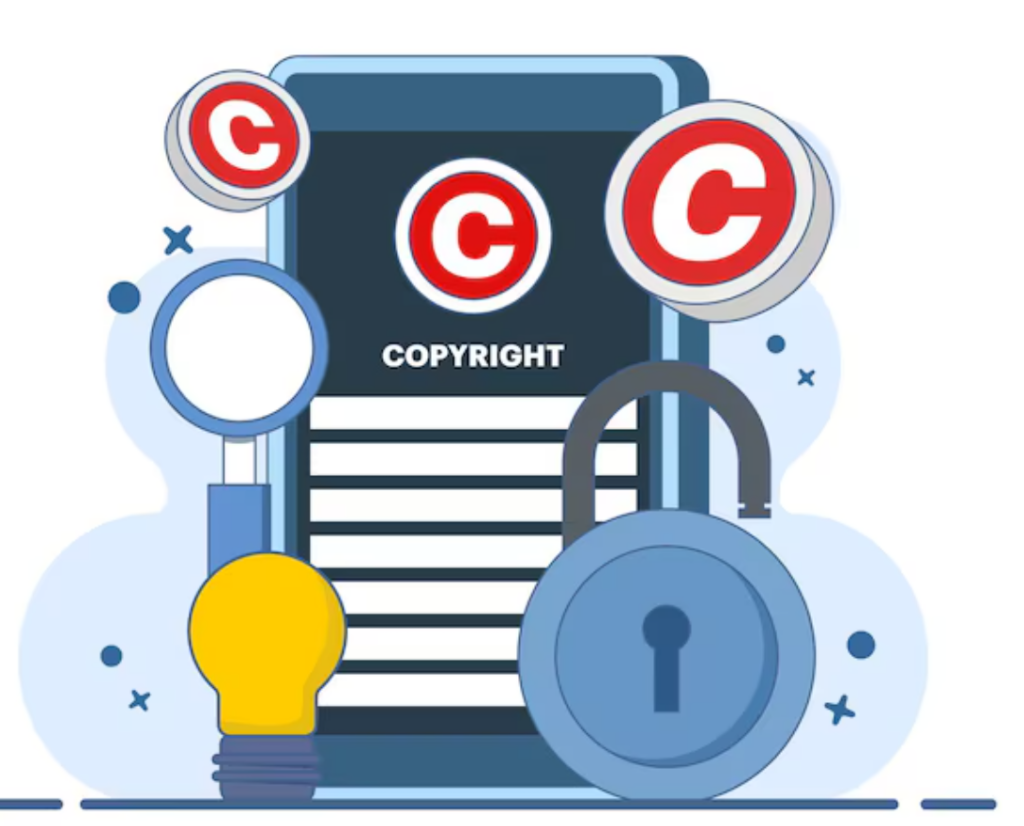
It was created to protect digital content such as music, movies, software, images, and written material from unauthorized distribution on the internet, at a time when copying and sharing digital files was becoming much easier.
Under this law, copyright owners can send a DMCA takedown notice to a hosting provider if their content is being used without permission. A typical DMCA process works like this:
- A copyright owner detects unauthorized use of their content.
- They send a DMCA complaint to the hosting provider.
- The hosting company reviews the complaint.
- The provider may remove the content or temporarily suspend the website.
Many hosting companies follow these rules strictly, and the reason goes deeper than simple compliance. It is tied to a specific part of the law called the safe harbor provision.
Why the Safe Harbor Provision Matters?
Before looking at DMCA ignored hosting, it is worth understanding why most hosting companies respond to takedown notices so quickly in the first place. The answer lies in a legal protection built into the DMCA itself, and it explains the entire logic behind offshore hosting.
Section 512 of the DMCA includes what is known as the safe harbor provision. This section limits the liability of online service providers, including hosting companies, for copyright infringing material that their customers upload or store. In simple terms, a hosting provider that follows the DMCA notice and takedown process correctly is generally shielded from being held responsible for its customers’ infringing content.
To qualify for this protection, a US based hosting provider typically needs to meet several conditions, such as not having actual knowledge of the infringement, not receiving a direct financial benefit tied to the infringing activity, and acting promptly to remove or disable access to the material once a valid notice is received.
This is exactly why hosting companies in the United States and Europe tend to suspend content quickly after receiving a complaint. It is not only about respecting copyright, it is about preserving their own legal protection.
Another condition tied to the safe harbor is the requirement that a hosting provider adopt and reasonably enforce a policy for terminating repeat infringers. This is one reason mainstream hosts tend to suspend accounts after multiple complaints rather than a single one, since failing to act on repeat offenders can put their own safe harbor status at risk.
Offshore hosting providers, on the other hand, are not bound by US law, and the safe harbor provision does not apply to them in the same way. Since they are not seeking protection under Section 512, they are not obligated to follow the same notice and takedown timeline. This distinction is the legal foundation that makes DMCA ignored hosting possible.
What Is DMCA Ignored Hosting?
Now that the legal background is clear, the actual definition of DMCA ignored hosting becomes easier to understand. This section explains what the term means in practice and what it does not mean.
DMCA ignored hosting refers to a type of web hosting service where providers claim they do not strictly enforce DMCA takedown requests.
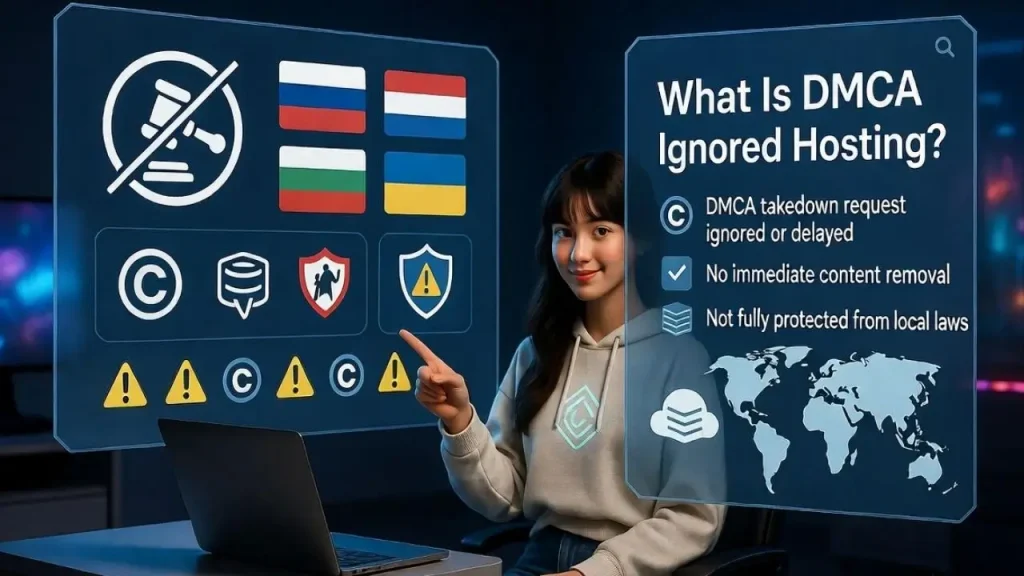
These hosting services are usually located in offshore jurisdictions, meaning countries that are not bound by United States copyright law.
This does not mean the provider completely ignores all complaints. Instead, they typically handle copyright reports based on their local laws and internal policies, rather than automatically removing content the moment a DMCA notice arrives.
Because of this approach, DMCA ignored hosting is often used by website owners who want more flexibility and a slower, more deliberate review process when hosting certain types of content.
How DMCA Ignored Hosting Works?
DMCA ignored hosting is not a single feature that a provider turns on. It is a combination of server location, legal jurisdiction, and internal copyright policy choices working together. The subsections below break down each part of that combination.
Offshore Server Locations
Most DMCA ignored hosting companies place their servers in countries where US copyright law does not directly apply. These countries have their own legal systems and may treat copyright complaints differently, which changes how quickly and how strictly a complaint gets acted on.
Different Complaint Handling Policies
Instead of immediately removing content after receiving a DMCA notice, offshore providers often review complaints according to their local regulations. Some providers only take action if the request comes through proper legal channels within their own jurisdiction, such as a local court order, rather than a standard DMCA notice sent from abroad.
Hosting Policies and Acceptable Use
Many DMCA ignored hosting providers clearly mention in their terms of service that they do not automatically respond to external DMCA notices. However, this flexibility is rarely unlimited. Most providers still maintain an acceptable use policy that prohibits genuinely illegal activities such as fraud, phishing, malware distribution, and content involving the exploitation of minors, regardless of where the servers are located.
Understanding a provider’s acceptable use policy is just as important as understanding its DMCA stance, since it defines the real boundaries of what is allowed.
6 Countries Famous for DMCA Ignored Hosting
Offshore hosting is closely tied to geography, since the country where a server physically sits determines which laws apply to it. The list below covers six locations commonly associated with DMCA ignored or offshore hosting environments.
1. Netherlands
The Netherlands has historically been a popular location for offshore hosting due to its strong data infrastructure and large internet exchange networks, including one of the busiest internet exchange points in the world.
Some providers operate there with more flexible complaint policies compared to hosts based directly in the United States, and the country’s dense fiber network also means low latency for European visitors, which is an added practical benefit beyond the legal angle.
2. Russia
Certain hosting companies in Russia provide offshore hosting services with different copyright handling policies compared to US based providers, partly because Russia is not a signatory to the same international enforcement agreements that make cross border DMCA compliance straightforward.
Website owners considering this location should also weigh factors such as payment processing limitations and connectivity to Western markets, which can be less consistent than in Western European data centers.
3. Bulgaria
Bulgaria has been used by some hosting providers offering offshore VPS and dedicated servers, often because of relatively lower infrastructure costs combined with a legal environment that does not mirror US copyright enforcement.
As an EU member state, Bulgaria still follows EU level data protection rules, which can matter for privacy focused projects.
4. Moldova
Moldova has also appeared in offshore hosting discussions because some providers host servers there for privacy focused services, taking advantage of a jurisdiction with limited direct cooperation on foreign copyright claims.
Infrastructure quality here can vary more between providers than in larger hosting markets, so checking network performance directly is worthwhile.
5. Hong Kong
Hong Kong has traditionally been known for strong internet infrastructure and a legal framework that operates somewhat independently from mainland enforcement patterns, though its own intellectual property laws still apply to content hosted there.
Its position as a major connectivity hub in Asia also makes it attractive for sites targeting audiences across that region.
6. Seychelles
Some offshore hosting companies register their businesses in jurisdictions like Seychelles because of privacy friendly corporate regulations, which makes it easier for a hosting business itself to remain low profile even if its servers are physically located elsewhere.
It is worth noting that a company’s registration location and its actual server locations are often two different things, so this distinction is worth checking before assuming where data physically resides.
It is important to note that laws and enforcement practices can change over time, and not every provider registered or operating in these countries actually offers DMCA ignored hosting. The presence of infrastructure in a country does not automatically mean every host there follows a relaxed complaint policy.
Features of DMCA Ignored Hosting
Beyond the location and legal angle, DMCA ignored hosting providers tend to share a common set of practical features. Knowing these features helps in comparing one provider against another.
- Offshore Infrastructure: Servers are usually located outside the United States or other regions with strict copyright enforcement.
- Privacy Protection: Many providers allow customers to register services with minimal personal information.
- Flexible Payment Options: Some providers accept alternative payment methods such as cryptocurrency for added privacy.
- VPS and Dedicated Servers: DMCA ignored hosting is commonly available through VPS hosting or dedicated servers, which offer more control over the server environment.
- High Bandwidth Support: These services often provide high bandwidth limits to support websites with heavy traffic or large files.
DMCA Ignored Hosting vs Normal Hosting
Seeing the two hosting types side by side makes the practical differences easier to grasp. The table below compares DMCA ignored hosting with traditional, US or EU based hosting across the factors that matter most to website owners.
| Feature | Normal Hosting | DMCA Ignored Hosting |
|---|---|---|
| Copyright Enforcement | Strict compliance | Flexible policies |
| Server Locations | US, UK, EU | Offshore countries |
| Content Restrictions | High | More flexible |
| Risk of Suspension | Higher after complaints | Usually lower |
| Legal Framework | US or EU copyright law | Local offshore law |
| Payment Processing | Standard card processors | Often includes crypto options |
Advantages of DMCA Ignored Hosting
For the right use case, DMCA ignored hosting offers real practical benefits. This section lists the main advantages that lead website owners to choose it over conventional hosting.
- Greater Content Freedom: Offshore hosting providers may allow content that traditional hosting companies remove quickly.
- Reduced Risk of Immediate Takedown: Websites are less likely to be suspended immediately after receiving a copyright complaint.
- Privacy Focus: Some providers offer better privacy protections and anonymous payment options.
- Suitable for Certain Online Platforms: Websites dealing with file storage, streaming, or controversial topics may rely on professional DMCA ignored hosting services designed for offshore hosting environments.
Disadvantages and Risks
DMCA ignored hosting is not risk free, and the risks extend well beyond copyright complaints themselves. This section covers both the disadvantages already tied to the hosting service and the wider risks that exist outside the hosting layer entirely.
- Legal Responsibility: Website owners are still responsible for the content they publish. Hosting offshore does not make illegal activities legal.
- Reputation Concerns: Some offshore providers have weaker reputations due to poor customer support or unreliable infrastructure.
- Network Stability: In some cases, offshore hosting may offer slower support or less reliable performance compared to large international hosting companies.
Risks Beyond the Hosting Layer
Even when a hosting provider does not act on a DMCA notice, a website can still be affected through channels the hosting company does not control.
- Payment Processor Restrictions: Traditional payment processors and card networks sometimes refuse to work with sites linked to offshore or DMCA ignored hosting, which can cut off revenue even if the site itself stays online. This often pushes site owners toward cryptocurrency or alternative payment rails, which come with their own limitations for mainstream audiences.
- Domain Registrar Action: A domain registrar, which is often a separate company from the hosting provider, can suspend or seize a domain name in response to a legal complaint, regardless of where the server is physically located. This means a site can effectively go offline even if its hosting provider never removes a single file.
- Search Engine De-Indexing: Search engines can lower the ranking of a site or remove it from search results entirely after repeated copyright complaints, which reduces visibility even if the content technically remains online and reachable by direct link.
- Upstream Network Blocking: In some cases, internet service providers or upstream network operators can block access to a site at the network level, independent of any action taken by the hosting company itself, particularly in countries that maintain their own content blocking lists.
Who Uses DMCA Ignored Hosting?
DMCA ignored hosting tends to attract a fairly specific set of website categories rather than general purpose businesses. This section outlines who typically uses this kind of hosting and why.
Several types of websites are commonly associated with DMCA ignored hosting environments. These may include:
- File sharing platforms
- Streaming websites
- Torrent-related services
- Privacy-focused communities
- Data archiving platforms
In some cases, research projects or independent publishers also use offshore hosting to maintain content availability, particularly when they operate in areas where content moderation decisions elsewhere have been inconsistent. Journalists and archival projects working with material that faces disputed ownership claims sometimes fall into this category too, since a slower, more deliberate review process can matter when a takedown request is contested rather than clear cut.
Is DMCA Ignored Hosting Legal?
This is usually the first question that comes up once someone understands what DMCA ignored hosting actually is, and it deserves a more detailed answer than a simple yes or no.
DMCA ignored hosting itself is not illegal. Hosting providers simply operate in countries where United States copyright law does not directly apply, and choosing to host outside the US is not against the law on its own. However, the legality of the hosted content still depends on the local laws of the country where the server is located, and separately, on the laws of any country where the content is accessed or where the copyright owner is based.
It also helps to separate two different kinds of legal exposure. Civil liability relates to copyright holders suing for damages or seeking a court order to remove content, which is the typical outcome of an ignored DMCA notice escalating further. Criminal liability is a different and more serious matter, usually reserved for large scale, deliberate copyright infringement carried out for commercial gain, and it can apply regardless of where a website is hosted if the operator can be identified and is within reach of a relevant jurisdiction.
Even when using offshore hosting, website owners remain responsible for ensuring that their content follows applicable regulations, both in the country where the server sits and, in many practical cases, in the countries where their audience and business activities are actually located.
When Should Someone Use DMCA Ignored Hosting?
DMCA ignored hosting is not a universal solution, and it fits some situations far better than others. This section outlines the scenarios where it is typically considered.
This type of hosting is usually considered in specific situations. Examples include:
- Websites receiving frequent copyright complaints
- Platforms dealing with controversial or sensitive topics
- Projects that require offshore hosting environments
- Websites focusing on privacy and independent publishing
Choosing this type of hosting should always involve careful research about both the provider and the legal environment it operates in, and ideally a clear read of what happens if a dispute escalates beyond a simple notice.
How to Choose a Reliable DMCA Ignored Hosting Provider?
Not every provider that claims to offer DMCA ignored hosting delivers the same level of reliability. This section covers the practical factors worth checking before signing up with any offshore provider.
If someone decides to use offshore hosting, several factors should be considered before choosing a provider.
- Server Location: Check where the provider’s data centers are located and which laws apply in that country.
- Network Quality: Reliable providers usually operate in professional data centers with stable infrastructure.
- VPS or Dedicated Options: Many offshore providers specialize in VPS or dedicated server plans that offer more control and performance.
- Privacy Policy: Review the provider’s privacy policy to understand how customer data is handled.
- Acceptable Use Policy: Read the fine print on what is and is not allowed, since even flexible providers draw a firm line at genuinely illegal content.
- Customer Support: Reliable hosting companies should still provide responsive technical support, even when they operate offshore.
- Track Record: Look for independent reviews and forum discussions rather than relying only on testimonials shown on the provider’s own website, since real world uptime and complaint handling patterns tend to surface there first.
FAQs
Does DMCA ignored hosting mean no rules apply at all?
No. It means the provider does not automatically follow the standard US DMCA takedown process. Providers still enforce their own acceptable use policies and remain subject to the laws of the country where they operate.
Can a copyright holder still take legal action against a site on DMCA ignored hosting?
Yes. A copyright holder can still pursue legal action, including through courts in the country where the server is located or where the website operator can be identified. DMCA ignored hosting reduces the likelihood of an automatic takedown, but it does not remove legal exposure entirely.
Is DMCA ignored hosting the same as offshore hosting?
They overlap but are not identical. Offshore hosting refers to the physical location of the server outside the user’s home country. DMCA ignored hosting refers specifically to a provider’s policy on handling DMCA complaints, and most, but not all, DMCA ignored providers happen to be offshore.
Will search engines still index a website on DMCA ignored hosting?
Search engines can index the site normally, but repeated copyright complaints against a domain can still lead to lower rankings or removal from search results, independent of what the hosting provider does.
Do DMCA ignored providers allow any type of content?
No. Nearly every provider that markets itself as DMCA ignored still enforces a baseline acceptable use policy that bans genuinely illegal material, such as content involving the exploitation of minors, malware distribution, phishing, and fraud. The flexibility applies specifically to copyright related complaints, not to all content categories.
How is DMCA ignored hosting different from a VPN or proxy service?
A VPN or proxy changes how a visitor’s traffic is routed and can mask a user’s location, but it does not change where a website’s actual files are stored. DMCA ignored hosting changes where the site itself is hosted and which jurisdiction’s laws and complaint procedures apply to that server.
Conclusion
DMCA ignored hosting refers to offshore web hosting services that do not automatically enforce United States DMCA takedown notices. These providers operate in jurisdictions where copyright laws differ, and this gap exists because they fall outside the DMCA’s safe harbor system that shapes how US and EU based hosts respond to complaints. As a result, they are free to handle copyright reports according to local regulations rather than US law.
This hosting model is commonly used by websites that require greater content flexibility, privacy focused infrastructure, or simply more breathing room while a dispute gets resolved. That said, choosing this kind of hosting still requires careful consideration of legal responsibility, provider reliability, and the risks that exist outside the hosting layer itself, from payment processors to domain registrars to search visibility.
Understanding how DMCA ignored hosting works, including the legal reasoning behind it, helps website owners make informed decisions about where and how their online platforms should be hosted.


11 Comments