
Picture this. You search for anonymous hosting at midnight, find a provider that promises zero ID checks, and start signing up feeling relieved. Then step three of checkout asks for a copy of your ID card and a selfie holding it next to your face. That “anonymous” hosting company just asked for more personal proof than your bank does.
This happens more often than people expect. A lot of hosting companies use the word anonymous loosely in their marketing, then quietly ask for identity documents the moment real money changes hands. If privacy is the actual reason you are looking at offshore hosting in the first place, that kind of bait and switch defeats the whole purpose of signing up in the first place.
This guide walks through what a genuine no KYC hosting payment actually looks like in 2026, which payment methods really protect your identity and which ones only pretend to, and a complete step by step walkthrough using QloudHost so you can see exactly how the process plays out in real life, not just in theory.
By the end, you will know exactly which questions to ask before you hand over a single dollar, and how to keep your real identity out of the transaction entirely.
Quick note: Anonymous payment is about keeping your personal and financial details separate from a legal hosting purchase. It has nothing to do with hiding illegal activity, and no payment method changes what content is or is not allowed under the laws of the country where your server sits.
What Does No KYC Actually Mean In Hosting?
KYC stands for Know Your Customer. It is a verification process that started in banking, where financial institutions are legally required to confirm who their customers actually are before letting them move money.
Somewhere along the way, a lot of hosting companies adopted the same habit, even though nothing in most countries’ laws actually requires a web host to check your passport before selling you server space.

In practice, KYC on a hosting site can show up in a few different forms. Sometimes it is a straightforward request for a government ID upload. Sometimes it is more subtle, like requiring a phone number that gets verified by SMS, or a credit card that has to match the billing name exactly, or a home address that gets cross checked against your card statement.
A genuine no KYC hosting provider skips all of that. Signup usually needs nothing more than an email address. No name field that actually gets checked against anything, no address verification, no phone number tied to your real identity, and definitely no photo ID.
It is worth being clear about one thing though. No KYC does not mean no records exist at all. The provider still knows your IP address at signup unless you use a VPN, still has your email address on file, and still has a transaction record of whatever payment method you use. No KYC simply means the provider is not actively trying to confirm your real world identity as a condition of doing business with you.
Why Anonymous Payment Matters for Offshore Hosting
Here is something a lot of people miss when they first start looking into offshore or DMCA ignored hosting. Picking a provider in the Netherlands or another privacy friendly country protects your content from a legal standpoint, since that server now sits outside direct US copyright jurisdiction.
But the server location alone does not protect your identity. That part depends entirely on how you sign up and how you pay.
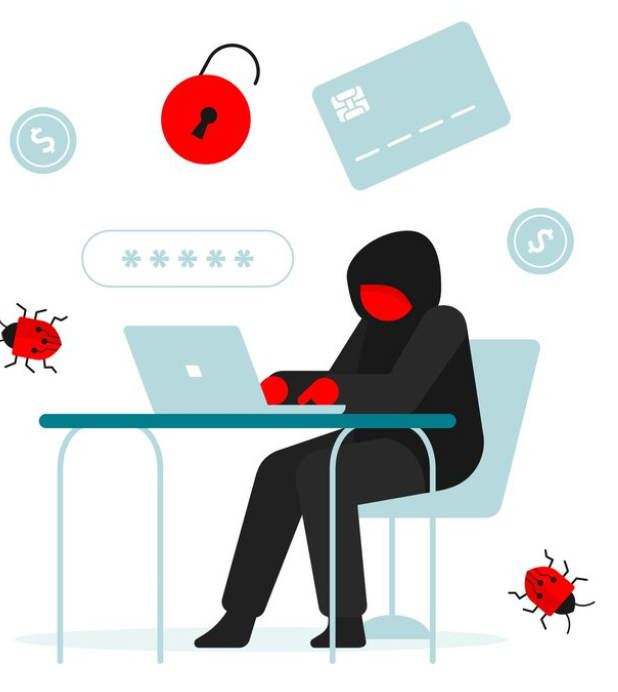
Think of it this way. If you find the most privacy focused, no KYC, offshore provider on the planet, then sign up with your personal Gmail account and pay with your personal Visa card that has your legal name printed on it, you have just attached your real identity to that anonymous hosting account anyway. The jurisdiction protects your content from takedown pressure. It does nothing to protect your identity from being traced back through the payment trail.
This matters most for the exact kind of people who search for this topic in the first place. Adult content creators who do not want their hosting bill showing up on a shared bank statement. Journalists and activists publishing in regions where that kind of speech carries real risk. Gambling and casino site operators working across jurisdictions with different rules. Privacy researchers and everyday website owners who simply do not want their infrastructure tied to their name, for reasons that are entirely their own business.
For all of these situations, the payment method is not a small detail buried in the checkout page. It is often the single weakest link in an otherwise solid privacy setup.
Real Anonymous Payment Methods That Actually Work In 2026
Not every payment method labeled crypto friendly gives you the same level of privacy. Here is an honest breakdown of what is actually available and how private each option really is.
| Payment Method | Privacy Level | Why? |
|---|---|---|
| Monero (XMR) | Very High | Sender, receiver, and transaction amount are all hidden by default |
| Bitcoin (BTC) | Medium (pseudonymous) | Public ledger, can be traced back through a KYC verified exchange |
| USDT and other stablecoins | Medium (pseudonymous) | Same public blockchain traceability as Bitcoin |
| Credit card | None | Your legal name is required as a condition of use |
| PayPal | None | Requires a verified account tied to your identity |
| Bank transfer | None | Full banking details are attached to every transfer |
◆ Bitcoin (BTC)
Bitcoin is the most widely accepted crypto payment option across offshore hosts, QloudHost included. It is worth understanding what Bitcoin actually protects and what it does not. Every Bitcoin transaction is permanently recorded on a public ledger. Your wallet address is not directly tied to your name, but if you bought that Bitcoin on an exchange that required ID verification, your identity can potentially be traced back through that exchange’s own records. Bitcoin is pseudonymous, not fully anonymous.
◆ Monero (XMR)
Monero was built specifically to solve the privacy gap that Bitcoin leaves open. Transaction amounts, sender addresses, and receiver addresses are all hidden by default on the Monero blockchain. When a hosting provider accepts Monero, and a small number of privacy focused offshore hosts do, it is genuinely the strongest payment option for anyone who wants maximum anonymity.
◆ USDT and Other Stablecoins
Tether and similar stablecoins are popular because their value does not swing around the way Bitcoin’s does, which makes budgeting for a hosting bill much simpler. Privacy wise, they behave a lot like Bitcoin since most run on public blockchains like Ethereum or Tron. Convenient for pricing, but not private by design.
What Does Not Actually Work?
PayPal, standard credit cards, and bank transfers all carry your legal name as a condition of using them, no matter what a hosting provider’s marketing page claims about privacy. If a site accepts these alongside crypto and still calls itself anonymous hosting, the anonymity only applies to the customers who actually choose the crypto option.
How to Buy Offshore Hosting Anonymously In 2026? Step-by-Step Process
QloudHost is one of the offshore hosting providers that has built its entire payment flow around this exact need, so it works well as a real world example. Here is exactly how the process goes from start to finish.
Step 1: Set Up a Clean Starting Point
Before you even open QloudHost’s website, get an email address that has nothing to do with your real identity. A free Proton Mail or Tutanota account created specifically for this purpose works well. If you want to go a step further, connect through a VPN before you start browsing, so your signup session is not tied to your home IP address from the very first click.
Step 2: Pick a Plan
Head to QloudHost’s site and choose the plan that fits your project, whether that is shared hosting, a VPS, or a dedicated server. Pricing starts around $3.50 a month for entry level shared hosting, with VPS and dedicated options scaling up from there depending on the resources you actually need.
Step 3: Fill Out the Signup Form With Minimal Information
This is where a genuine no KYC provider shows its hand. On QloudHost, account creation only actually requires your email address to function. Skip anything that is not marked as a required field, and there is no requirement that whatever name you do enter matches any government document.
Step 4: Choose Crypto at Checkout
At the payment step, QloudHost lists several options including credit card, PayPal, bank transfer, and cryptocurrency such as Bitcoin and USDT. Select the crypto option. This single click is what actually determines whether your payment trail stays private, so do not skip past it out of habit just because a card is faster to type in.
Step 5: Complete the Payment From a Clean Wallet
Once you select crypto, you will be given a wallet address and the exact amount to send, usually along with a QR code for convenience. Send the payment from a wallet that was not funded directly from a KYC verified exchange account, if you want to keep the trail as clean as possible.
Step 6: Wait for Blockchain Confirmation
Once the network confirms your transaction, which usually takes anywhere from a few minutes to under an hour depending on the coin and network congestion, the payment is marked complete automatically. There is no manual review step waiting to ask you follow up questions.
Step 7: Get Your Login Details
Your hosting account activates automatically once payment clears, and your login credentials arrive at the email address you signed up with. At no point in this entire process does a real name, address, or ID document enter the picture.
Step 8: Do Not Forget Domain Privacy
If you are registering a new domain alongside your hosting, turn on WHOIS privacy protection immediately. A perfectly anonymous hosting account paired with a domain that publicly lists your real name and address in its WHOIS record defeats the entire point of everything you just did.
Common Mistakes That Quietly Break Your Anonymity
Even people who genuinely want to stay private end up leaking their identity through small habits that feel harmless in the moment.
- Funding your wallet straight from a KYC exchange. If you buy Bitcoin on an exchange that verified your passport, then send that same Bitcoin directly to your hosting provider, the exchange now holds a record connecting your identity to that exact transaction.
- Using an email tied to your real identity. Signing up with the same Gmail account you use for your bank, your LinkedIn, and your food delivery app removes most of the benefit of an otherwise anonymous payment.
- Skipping WHOIS privacy on your domain. This is the single most common mistake. People spend real effort on the hosting side of privacy and then register a domain with their real name sitting in a public WHOIS record for anyone to look up.
- Logging in repeatedly from the same home IP. If privacy matters enough that you went through all of this, accessing your hosting control panel from your home internet connection every single day creates its own pattern that can be noticed over time.
- Reusing the same wallet address everywhere. Using one crypto wallet address across multiple services makes it easier for anyone analyzing the blockchain to link those accounts together, even without ever learning your name.
Few Extra Privacy Habits Worth Building
Paying anonymously covers the biggest piece of the puzzle, but a handful of smaller habits round out the picture and make the whole setup much harder to unravel.
Use a VPN or Tor for ongoing access, not just at signup. A lot of people are careful during the sign up process and then log into their control panel from their home connection every day afterward, which quietly undoes the effort they put in earlier.
Keep a separate browser profile just for managing this account. Browsers remember more than people realize. Saved passwords, autofill data, and cross site cookies can all create connections between your anonymous account and your regular browsing without you noticing.
Choose an authenticator app over SMS for two factor authentication whenever a provider gives you the option. A phone number can usually be traced back to a real identity through the mobile carrier, which defeats the purpose of everything else you have done.
Avoid mentioning identifying details in support tickets. If you ever contact support, stick to the technical issue at hand. People sometimes mention their real name, business name, or location in a support chat without thinking twice, and that single message can undo months of careful setup.
Frequently Asked Questions
1. Is it actually legal to pay for hosting anonymously?
Yes. There is no law that requires an individual to prove their identity before buying web hosting. Paying with cryptocurrency for a legal service is no different from paying cash for anything else.
2. Does paying with Bitcoin make me 100% untraceable?
Not completely. Bitcoin transactions are public and permanent on the blockchain. If the coins can be traced back to a KYC verified exchange account, your identity can potentially be uncovered. Monero offers much stronger protection if true anonymity matters to you.
3. Can I still get a refund if I paid with crypto?
Most providers that accept crypto, including QloudHost, honor their standard refund policy regardless of payment method. Refunds are usually issued back to the same wallet address or as account credit, so check the specific policy before you buy.
4. What happens if a provider asks for ID after I have already signed up?
This is a red flag. A genuine no KYC provider does not add identity requirements after the fact. If this happens, it usually means the marketing promised more privacy than the actual policy delivers.
5. Do I need a VPN to sign up anonymously?
A VPN is not strictly required, but it closes an important gap. Without one, the provider still logs your real IP address at signup, which is one more data point tying the account back to you.
6. Is Monero better than Bitcoin for anonymous hosting payments?
For pure privacy, yes. Monero hides the sender, receiver, and transaction amount by default. Bitcoin only hides your name, not the transaction itself, so Monero is the stronger choice whenever a provider accepts it.
7. What if my crypto payment does not confirm right away?
This is normal and usually just depends on network congestion. Most confirmations complete within an hour. If a payment does not show up after a longer delay, contact support with your transaction ID rather than sending the payment a second time.
Conclusion
Anonymous hosting is not about hiding from the law. It is about keeping ordinary financial and identity details out of a transaction that has nothing to do with anyone else. Offshore jurisdiction protects your content. The payment method you choose protects you.
The good news is that the actual process is simpler than most people expect once you know what to look for. Skip the personal details wherever they are optional, choose crypto over cards or PayPal every time it is offered, and treat your domain’s WHOIS privacy with the same seriousness as your hosting payment.
Providers like QloudHost have already built their entire flow around genuine no KYC signup, so most of the hard work here really just comes down to knowing which button to click at checkout. Get that one decision right, and everything else falls into place.
4 Comments