![10 Best DMCA Ignored Hosting In 2026 – [Tested & Reviewed]](https://bestdmcaignoredhosting.com/wp-content/uploads/2026/07/best-dmca-ignored-hosting-BLLACK-logo-png.png)
The term “DMCA ignored” comes up constantly in hosting discussions, especially among website owners who want fewer restrictions on what they publish.
At first glance, it sounds like a loophole, a way to bypass copyright rules completely. That interpretation is misleading and, if acted on without understanding it properly, can lead to real legal exposure.
DMCA ignored is a question of jurisdiction, legal differences between countries, and individual hosting policy, not a way of avoiding the law altogether.
To understand what it actually means, it helps to break down how copyright enforcement works internationally and how hosting providers respond to complaints once they receive them.
What Is DMCA?
The Digital Millennium Copyright Act (DMCA) is a United States law passed in 1998 to address copyright protection in the digital environment.
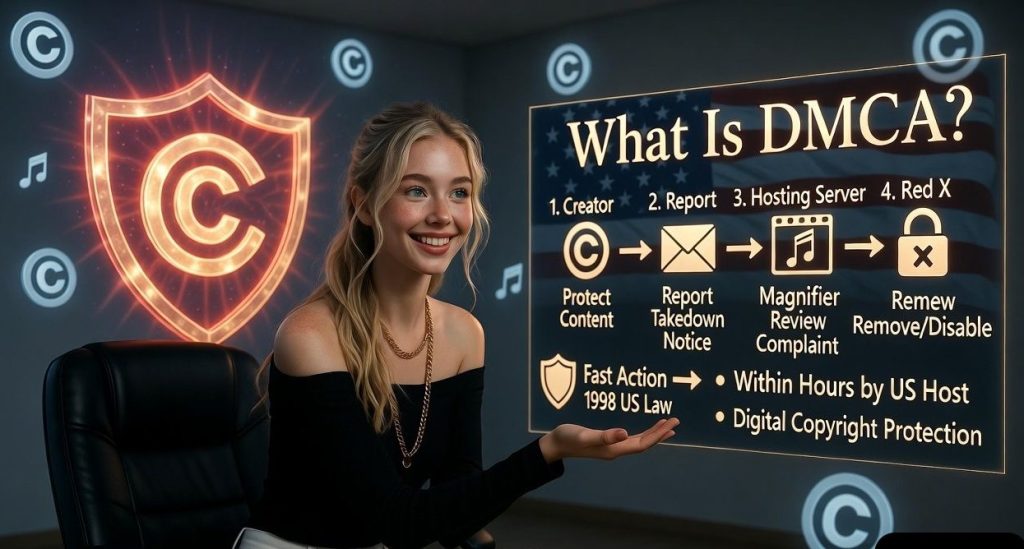
It was written before most of today’s hosting, streaming, and user generated content platforms existed, but its core mechanism, the takedown notice, has become the standard way copyright holders act online.
Its main purpose is to:
- Protect creators from unauthorized use of their content
- Provide a formal system for reporting copyright violations
- Require hosting providers to remove infringing content after receiving a valid complaint
Most US based hosting companies, and many international providers that voluntarily follow US style policy, act on valid takedown notices quickly. That responsiveness is exactly what website owners are trying to opt out of when they search for “DMCA ignored” hosting.
What DMCA Requires From Hosting Providers?
Under the DMCA, a hosting provider that wants legal protection from liability for what its users upload must follow a specific process when it receives a valid notice: review the claim, remove or disable access to the flagged material, and notify the account holder. This is often called the “notice and takedown” system.
The Safe Harbor Provision
The reason US hosting providers respond so consistently is the DMCA’s safe harbor provision. It shields a hosting company from copyright liability for its users’ content, but only if the provider complies with valid takedown requests.
A provider that ignores notices loses that legal shield in the US. A provider that operates entirely outside US jurisdiction was never covered by it in the first place, which is the real reason some hosts do not respond the way US companies do.
What Does DMCA Ignored Actually Mean?
DMCA ignored refers to hosting services that do not enforce DMCA takedown requests the way US based providers typically do.
This usually happens because:
- The hosting company operates outside the United States
- The country where its servers are located does not require DMCA compliance
- The provider follows its own internal policy, shaped by local regulation rather than US law
The term is frequently misunderstood, though. DMCA ignored does not mean:
- Copyright laws no longer apply
- Illegal content is allowed freely
- The website is protected from every form of legal action
A more accurate definition: DMCA ignored hosting means the provider is not legally obligated to respond immediately, or at all, to a DMCA notice because of where it operates, but legal responsibility for the content itself does not disappear.
How Jurisdiction Shapes DMCA Enforcement?
How copyright complaints actually play out online has less to do with the DMCA itself and more to do with where a hosting provider is legally based. Jurisdiction decides whether a takedown notice carries any real weight, or none at all.
Why Server Location Matters
Copyright enforcement is tied to legal jurisdiction. A hosting company is generally only bound by the laws of the country where it is legally established and where its infrastructure operates. A US law cannot compel a company with no US presence to act, which is why server location is the single biggest factor in whether a DMCA notice has any practical weight.
Local Law vs US Law
Even where DMCA has no legal force, that does not mean an unregulated environment exists. Every country has its own copyright framework, and many are shaped by international agreements such as the Berne Convention, which extends baseline copyright recognition across member countries. A hosting provider outside the US is still bound by its own country’s law, just not by DMCA specifically.
How DMCA Ignored Hosting Works in Practice?
The mechanics of DMCA ignored hosting come down to server location and the legal jurisdiction that governs it.
Here is the general sequence:
- A website is hosted on servers located in a country with different copyright enforcement standards
- The hosting provider follows its own local law instead of US DMCA regulations
- A DMCA complaint is submitted to the provider
- The complaint may not result in immediate removal, since the provider is not legally required to act on it
The Notice and Review Process
Some DMCA ignored providers still review incoming notices, even without a legal obligation to. They may check whether the underlying content is illegal under their own country’s law, rather than simply whether it infringes US copyright. Others may take no action at all unless a local court order compels them to.
What Happens When a Provider Ignores a Notice
For the person who filed the complaint, an ignored notice usually means the content stays online. It does not mean the matter is closed. Depending on how serious the underlying issue is, a copyright holder can escalate through other channels, including the site’s domain registrar, its upstream network provider, search engines (for de-indexing), or local courts in the country where the host operates.
This distinction is important for hosting providers too, since it explains why “DMCA ignored” is often linked with offshore hosting, though the two terms are not identical.
Why People Use DMCA Ignored Hosting
There are practical, legitimate reasons website owners choose this type of hosting.
Common motivations include:
- Content that gets flagged frequently under strict DMCA enforcement, even when the claims are disputed or false
- Wanting more control over how complaints are reviewed rather than having content removed automatically
- Hosting large volumes of user generated content that is difficult to monitor in real time
- Needing stability for projects that regularly attract takedown requests
It is also common for backup sites, mirror platforms, and projects with a higher than average risk of being reported.
What Types of Content Are Commonly Hosted
Certain categories of platforms gravitate toward DMCA ignored hosting because of how often they face takedown activity:
- Video and media streaming platforms
- File hosting and file sharing services
- Adult content websites
- Forums and communities built around user generated content
Hosting this kind of content on a DMCA ignored server does not remove legal responsibility from the site owner. Responsibility for what is published stays with the person or business that published it.
Is DMCA Ignored Hosting Legal?
The legality of DMCA ignored hosting depends on several factors, not just where the hosting provider is based.
Key points to understand:
- DMCA is a US law and does not apply globally in the same way
- Hosting a website in another country is not illegal by itself
- Every country enforces its own copyright and content laws
- International legal cooperation can still apply in serious cases
In short: hosting location matters, but the content itself matters more.
Civil vs Criminal Liability
Copyright disputes are typically civil matters, meaning the copyright holder pursues action, not a government prosecutor. But some categories of content cross into criminal law regardless of where they are hosted. A DMCA ignored provider has no bearing on criminal liability, since criminal law is enforced through international cooperation and treaties, not through copyright takedown systems.
When International Law Still Applies
Even with an uncooperative hosting provider, international legal mechanisms, such as mutual legal assistance treaties between countries, can still be used in serious cases. DMCA ignored hosting reduces exposure to routine copyright takedown requests. It does not create a jurisdiction free zone.
Risks Beyond DMCA That Ignored Hosting Does Not Solve
This is one of the most overlooked parts of the conversation. Even a hosting provider that fully ignores DMCA notices does not control several other points of failure that can still take a website offline or restrict its reach:
- Domain registrars can suspend or seize a domain independently of the hosting provider, especially if the registrar itself is based in a country with different rules
- Payment processors frequently have their own content policies and can cut off payment processing regardless of where a site is hosted
- Search engines can de-index a site or specific pages even if the content remains technically live
- Upstream network providers (the infrastructure the hosting company itself relies on) can also receive and act on complaints independently
A site owner who only evaluates hosting policy while ignoring these other dependencies often ends up with a false sense of security.
Pros and Cons of DMCA Ignored Hosting
Every hosting decision involves trade-offs, and DMCA ignored hosting is no exception. Weighing these advantages and disadvantages honestly helps you decide whether it actually fits your project, rather than relying on marketing claims alone.
| Pros | Cons |
|---|---|
| Reduced risk of immediate, automatic content takedown | Legal risk still exists depending on the content itself |
| More flexibility in how content disputes are handled | Some providers operate with weaker infrastructure or support |
| Greater control over the complaint review process | Payment methods and onboarding can be more restrictive |
| Better suited to platforms with high volumes of user generated content | Provider quality varies significantly, and not all “DMCA ignored” claims are backed by reliable service |
DMCA Ignored vs Offshore Hosting
These two terms are related but not interchangeable.
- Offshore hosting describes hosting a website in a country other than the site owner’s own, usually to take advantage of different regulatory or tax environments
- DMCA ignored hosting describes how a provider handles copyright complaints specifically
Some offshore providers do ignore DMCA requests, but plenty of offshore hosts still comply with them fully, particularly if they have business ties to the US. Understanding this difference prevents the common mistake of assuming any offshore host will automatically ignore takedown notices.
Common Misconceptions About DMCA Ignored
- “It is completely illegal.” Not accurate. Legality depends on jurisdiction and the type of content involved, not the hosting label itself.
- “No rules apply.” Every country enforces its own laws, and those laws still apply to the site owner.
- “Content is fully protected.” There is no guarantee of protection from legal action, only reduced exposure to routine DMCA enforcement.
- “All providers offering this are trustworthy.” Some providers advertise “DMCA ignored” as a marketing hook without offering reliable infrastructure or transparent policies.
How to Choose a Reliable DMCA Ignored Hosting Provider
Choosing a provider requires more than trusting a marketing claim on a landing page.
Questions to Ask Before Signing Up
- Where exactly are the servers located, and what does that country’s law say about hosted content?
- What does the provider’s terms of service actually say about takedown requests, not just the marketing copy?
- What is the provider’s track record for uptime and infrastructure reliability?
- Are the provider’s policies clearly documented, or vague and inconsistent?
- Does the provider make unrealistic promises, such as claiming total immunity from any legal action?
A reliable provider is defined by stability, clear documentation, and honest policy language, not by how aggressively it markets the word “ignored.”
Who Should Consider DMCA Ignored Hosting?
This type of hosting is not for everyone. It tends to work best for users who already understand how hosting jurisdiction and content liability interact.
It is a reasonable fit for:
- Experienced website owners who understand server locations and legal responsibility well enough to manage the associated risks
- Projects that face frequent, often disputed, takedown activity under strict DMCA enforcement
- Platforms that need more control over content moderation, such as forums or user generated content sites
Who Should Avoid It?
For many users, DMCA ignored hosting introduces more risk than benefit.
It is generally not suitable for:
- Beginners with limited legal awareness, who may not recognize the risks involved in different jurisdictions
- Business or corporate websites with compliance requirements, since this hosting model rarely aligns with regulatory standards
- Brands that depend on trust and reputation, which can be damaged by association with loosely regulated hosting environments
Frequently Asked Questions
Does DMCA ignored hosting mean my content can never be taken down?
No. It reduces the likelihood of an automatic takedown from a DMCA notice specifically, but content can still be removed through local law, domain registrar action, or other channels.
Is it illegal to use a DMCA ignored hosting provider?
Using this type of hosting is not illegal by itself. Legal risk comes from the content published, not from the hosting arrangement.
Can a DMCA ignored host still be forced to act by a court?
Yes. Local courts in the country where the provider operates can still compel action, and international legal cooperation can apply in serious cases.
Is DMCA ignored the same as offshore hosting?
Not exactly. Offshore hosting refers to hosting outside your home country. DMCA ignored describes how a provider handles copyright complaints. The two often overlap but are not identical.
Conclusion
DMCA ignored does not mean the law is being ignored altogether. It reflects the reality that hosting providers operate under different legal systems, and jurisdiction determines how, or whether, a DMCA notice gets enforced.
The key point to remember is that reduced enforcement is not the same as zero responsibility. Website owners still need to understand applicable local laws, evaluate providers carefully, and make informed decisions about the content they publish and where they host it.
Used with the right understanding, DMCA ignored hosting can serve specific, legitimate needs. Used without that understanding, it can create risks that a hosting policy alone cannot solve.